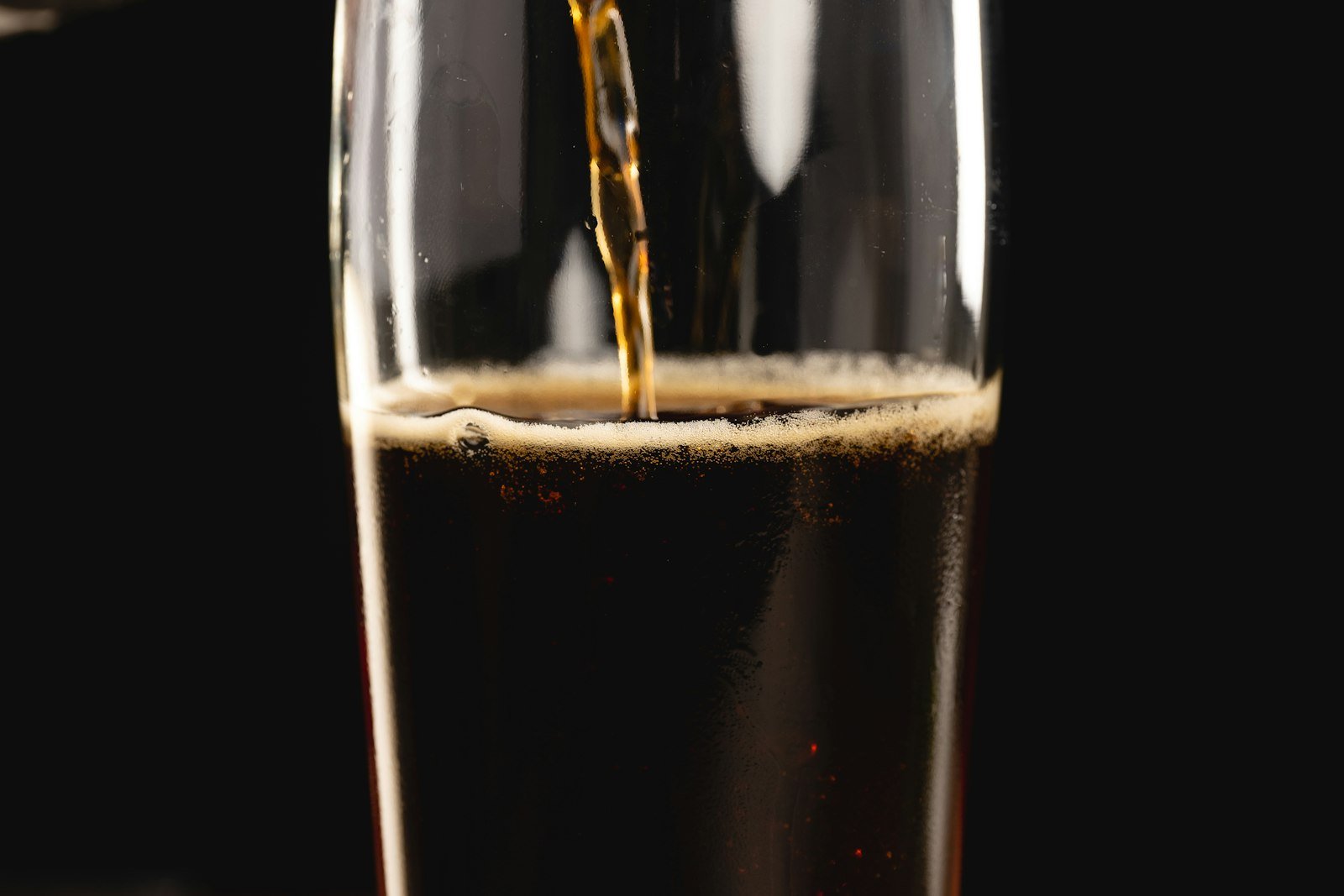

Dunkel
Dunkel means dark in German, and Munich dunkel is the dark lager that Bavarians drank before pale beer existed. It gets its color from Munich malt rather than roasted barley, so it tastes of bread crust and light chocolate without any burnt edge. It is smooth, moderately strong and very drinkable.
Food pairings
- Roast pork and sausages
- Pretzels
- Mushroom dishes
Glassware and serving temperature
Mug or dimpled stein45 to 48°F (7–9°C)
What it tastes like
Toasted bread, nuts, a little caramel and milk chocolate, with a soft body and a clean, slightly sweet finish. Hops are barely noticeable. It is lighter and less roasty than a porter or stout, and sweeter and rounder than a schwarzbier.
Where it comes from
Until the 1800s almost all Bavarian beer was dark, because malt was kilned over fire and came out brown. The lager yeast and cold cellars of Munich made that dark beer smooth, and dunkel was the result. Pale Helles replaced it as the everyday beer in the 1890s, but every Munich brewery still makes one.
How to serve it
7–9°C in a mug or stein. It is a session beer in Bavaria and is meant to be drunk by the half liter.
What to eat with it
Roast pork, sausages, roast chicken, pretzels, mushroom dishes and mild cheese. It is the classic beer with a Bavarian pork knuckle.