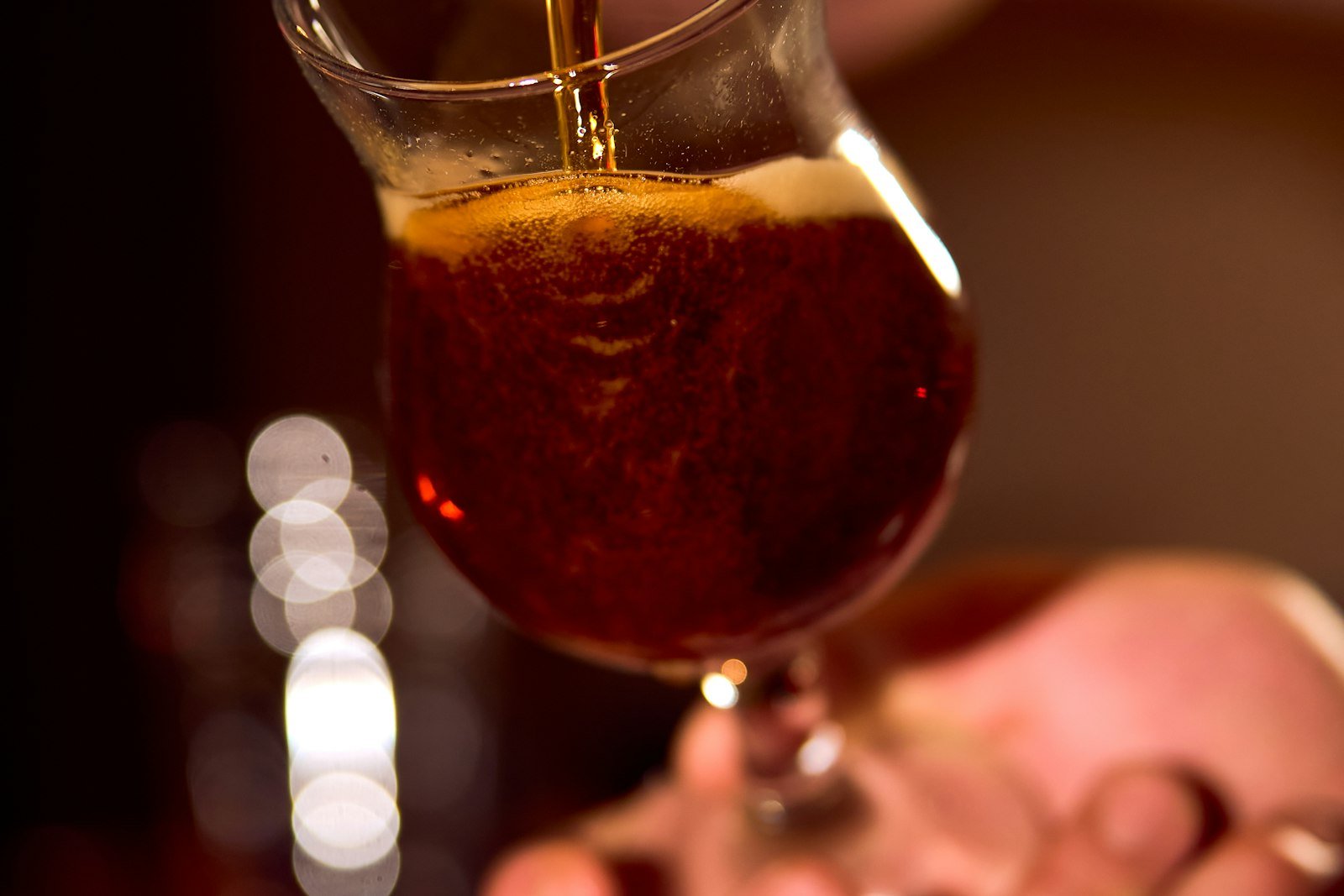

Bock
Bock is a strong lager with a deep malt flavor and little hop character. It ranges from amber to dark brown and from 6.3% to over 7% ABV. Traditional bock is a winter and spring beer, and the stronger doppelbock was brewed by monks to sustain them through Lent.
Food pairings
- Roast pork and ham
- Venison
- Aged Gouda
Glassware and serving temperature
Mug or tulip45 to 50°F (7–10°C)
What it tastes like
Toasted bread, caramel, a little dark fruit and a smooth, warming finish. Hop bitterness is just enough to keep it from being sweet. Doppelbock is richer and stronger, at 7% to 10%. Maibock is paler and hoppier. Eisbock is frozen and concentrated to 10% or more.
Where it comes from
Bock comes from Einbeck in northern Germany, a famous brewing town in the 1300s. Munich brewers copied the beer in the 1600s, and in the Bavarian accent Einbeck became ein Bock, a billy goat, which is why goats appear on so many labels. Paulaner's monks made the first doppelbock, Salvator, in the 1700s.
How to serve it
7–10°C, cool rather than cold, in a mug or tulip. Bock keeps well, so a bottle from last season is fine.
What to eat with it
Roast pork and ham, sausages, venison, aged Gouda and strong cheese. Doppelbock is good with dark chocolate.