Like your beer crisp, gently malty, and not too bitter? Start with a helles. Prefer grapefruit peel and pine? An American IPA might be more your thing. And if the roasted edge of black coffee sounds appealing, give Irish stout a look. Those are three very different directions, which is exactly the point.
The best beer styles are the ones that suit your taste. You don’t earn extra points for ordering the strongest beer, choosing something obscure, or pretending to enjoy bitterness when you don’t.
Before tackling a tap list, it helps to untangle three words: brand, product, and style. Sierra Nevada is the brewery and brand. Sierra Nevada Pale Ale is a particular product. American pale ale is its style, and ale is its broader fermentation family. Knowing the brewery name alone won’t tell you what every beer it makes tastes like.
“Type” is less precise. People use it to mean a broad grouping, such as lager, or a specific style, such as German Pils. Neither use is unusual, but getting more specific makes choosing easier.
The ten styles below are a deliberately varied starting selection, not a ranking or an attempt to squeeze every beer into one list. Each offers something different, along with a real product to recognize on a menu or shelf. Start with the flavors that sound good to you. The unfamiliar names can come later.
Compare the best beer styles at a glance
Use the flavor column first, then check bitterness and strength. The descriptions summarize typical style characteristics, while the ABV figures belong to the named products. ABV means alcohol by volume.
| Style | Usual family | Main flavor direction | Perceived bitterness | Product example | Product ABV |
|---|---|---|---|---|---|
| American Light Lager | Lager | Mild grain, restrained flavor | Low | Bud Light | 4.2% |
| Munich Helles | Lager | Fresh bread, soft malt | Gentle | Weihenstephaner Original Helles | 5.1% |
| German Pils | Lager | Crisp malt, herbal or spicy hops | Firm | Bitburger Premium Pils | 4.8% |
| Munich Dunkel | Lager | Toasted bread, richer malt | Restrained | Hofbräu Dunkel | 5.5% |
| Blonde Ale | Usually ale | Gentle malt, sometimes light fruitiness | Low to moderate | 805 Blonde Ale | 4.7% |
| Weissbier | Ale | Banana, clove, wheat | Low | Weihenstephaner Wheat Beer | 5.4% |
| English Porter | Ale | Chocolate-like malt, toast, gentle roast | Moderate | Fuller’s London Porter, bottled | 5.4% |
| Irish Stout | Ale | Coffee-like roast, dry finish | Noticeable, including roasted bitterness | Guinness Draught | 4.2% |
| American IPA | Ale | Citrus, pine, other prominent hop flavors | Pronounced | Bell’s Two Hearted IPA | 7.0% |
| Hazy IPA | Ale | Fruity hop aroma, softer texture | Often less sharp than American IPA | Sierra Nevada Hazy Little Thing | 6.7% |
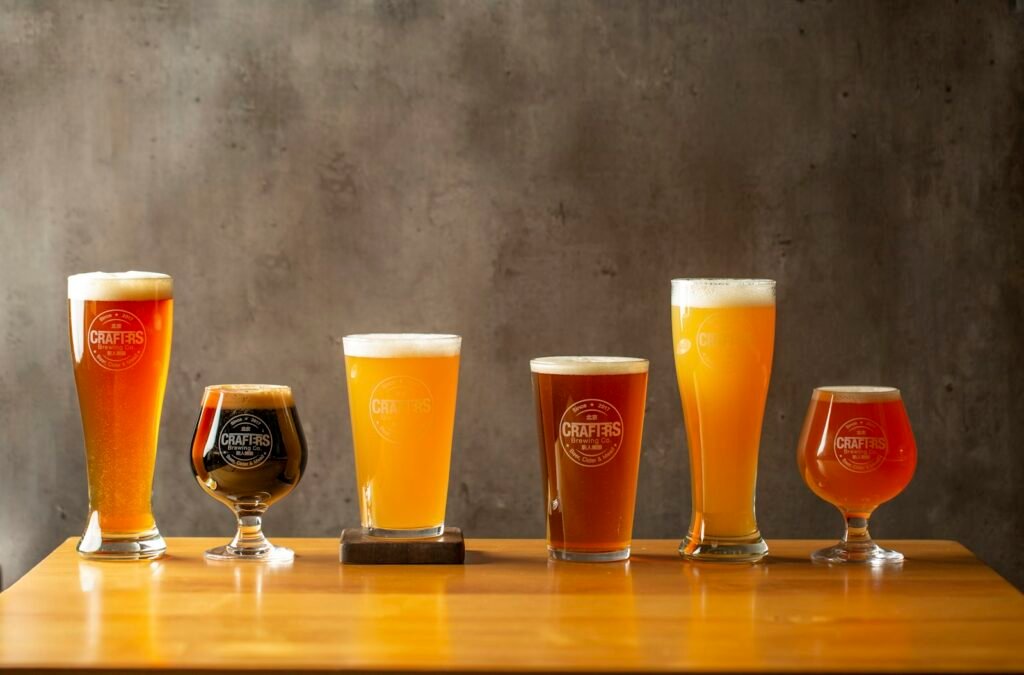
Notice how little color tells you about strength. The dark Guinness Draught has a lower listed ABV than the pale helles. And “lager” alone doesn’t tell you how bitter a beer will be: helles and German Pils take noticeably different approaches.
Best beer styles for different tastes
1. American Light Lager: best for restrained flavor and lighter body
Sometimes you want mild grain flavor, lively carbonation, and very little bitterness. American Light Lager keeps things in that territory, with a light body rather than a rich, lingering mouthfeel. Bud Light is a familiar example.
This lager style makes sense when subtlety is the attraction. But someone looking for toasted malt, expressive yeast, or a big hop aroma may find it too quiet. That’s a preference mismatch, not a reason to dismiss the whole style.
2. Munich Helles: best for soft, bread-like malt
Helles gives you a pale lager with a little more malt to enjoy: think fresh bread rather than caramel syrup. Bitterness stays restrained, and the finish shouldn’t turn sugary.
Weihenstephaner Original Helles is a useful starting point when a familiar light lager leaves you wanting more flavor, but an IPA sounds like too big a jump. Just don’t expect a sharp hop bite. Helles is about the malt, with hops keeping it balanced rather than taking over.
3. German Pils: best for a crisp lager with some bite
German Pils brings hops into clearer focus, with herbal, floral, or spicy aromas and a firm bitter finish. Bitburger Premium Pils gives you a recognizable example of this pale lager style.
It’s worth exploring when you like a clean finish but find softer lagers a little too gentle. The catch is that pale doesn’t mean mild. Someone who dislikes lingering bitterness may enjoy helles more, even though the two can look quite similar in the glass.
4. Munich Dunkel: best for toasted dark-lager flavor
Think about the browned crust on a good loaf of bread. That’s closer to Munich Dunkel’s malt character than the charred, coffee-like roast you might expect from its color.
Hofbräu Dunkel is a dark lager to look for, with its importer also describing caramel and cocoa notes. It suits drinkers who want richer malt without pronounced hop bitterness. But it isn’t necessarily thick, intensely roasted, or dessert-sweet. A stout craving and a dunkel craving aren’t quite the same thing.
5. Blonde Ale: best for an easy introduction to ales
An ale doesn’t have to announce itself with a wall of hops. Blonde Ale usually takes a gentler approach, with soft malt and room for light fruit or hop notes. Try 805 Blonde Ale as a reference.
It’s a sensible place to start when you’re curious about ales but prefer familiar, balanced flavors. Don’t expect the big aroma of an IPA, though. Some blonde ales are deliberately subtle, and fermentation approaches can vary despite the name.
6. Weissbier: best for banana-and-clove character
Weissbier shows how much flavor fermentation can bring to a wheat-based ale. Banana-like fruitiness, clove-like spice, and a fluffy feel are characteristic, without needing banana or clove additions to explain them.
Weihenstephaner describes those aromas in its Wheat Beer. This is a good direction when you want an aromatic beer without strong hop bitterness. The banana note is the deciding factor for some drinkers: charming to one person, distracting to another. There’s no need to talk yourself into liking it.
7. English Porter: best for chocolate-like malt and gentle roast
English Porter is a dark ale with room for cocoa, toasted bread, caramel, and restrained roasted flavors. Fuller’s London Porter is a useful example; the brewery describes coffee and chocolate notes in its bottled version.
It’s worth considering when malt appeals more than citrusy hops. Keep your sweetness expectations in check, though. “Chocolate notes” describes a flavor resemblance, not a promise that someone melted a candy bar into the beer.
8. Irish Stout: best for dry, coffee-like roast
Irish Stout is an ale style that gives roasted flavor more room, often with a distinctly dry finish. Guinness Draught is the obvious reference, and its producer describes roasted coffee and chocolate aromas.
Don’t let that creamy head talk you into expecting a sweet beer. Creamy describes the feel, not a promise of sweetness. For someone who enjoys coffee’s bitter edge, that combination can be appealing. Someone who dislikes roast may get along better with dunkel.
9. American IPA: best for prominent hops and a firm bitter finish
American IPA puts hop character at the center of an ale: citrus, pine, resin, or other expressive aromas, with malt underneath. Bell’s Two Hearted IPA is a current example, described by the brewery with grapefruit and pine notes.
This is the choice for someone who wants the hops to be unmistakable. Its intensity is also the reason to pause. A preference for restrained bitterness or lower alcohol may point you toward another style, or a different IPA variant.
10. Hazy IPA: best for fruity hop aroma and softer texture
Hazy IPA approaches hop-forward ale from a softer angle, emphasizing fruit-like aromas and a fuller impression rather than the sharper finish associated with many American IPAs. Sierra Nevada describes Hazy Little Thing as fruit-forward, with modest bitterness.
It’s worth considering when you enjoy hop aroma more than a lingering bitter bite. Still, hazy doesn’t mean bitterness-free or low-alcohol. Hazy Little Thing’s 6.7% ABV is a useful reminder to read the strength rather than guess from the texture.
beer types by brand
The quickest way to sort beer types by brand is to read past the biggest name on the packaging. You need the particular product, not just the producer.
| Brewery or brand | Product | Style | Fermentation grouping |
|---|---|---|---|
| Weihenstephaner | Original Helles | Munich Helles | Lager |
| Weihenstephaner | Wheat Beer | Weissbier | Ale |
| Sierra Nevada | Pale Ale | American Pale Ale | Ale |
| Sierra Nevada | Hazy Little Thing | Hazy IPA | Ale |
These products are documented on the breweries’ current pages, with their broader styles described in the guidelines.
The Weihenstephaner pair makes the point especially well: the same brewery makes both a lager and an ale. Sierra Nevada’s examples show the next layer. Two beers can share a producer and fermentation family but still offer different flavors.
When someone recommends “a Sierra Nevada,” ask which one. That extra detail can save you from buying something quite different from the beer they enjoyed.
what beers are lagers
Helles, German Pils, märzen, and dunkel are all lager styles. The grouping concerns fermentation, not whether the beer is pale enough to see through. In customary modern brewing terminology, lagers use lager yeast.
For a useful color comparison, put pale Weihenstephaner Original Helles alongside Hofbräu Amber Märzen and dark Hofbräu Dunkel. The official importer identifies both Hofbräu products as bottom-fermented lagers. Its Amber Märzen is listed as a draft specialty, so it isn’t necessarily a bottle-shop find.
That gives you pale, amber, and dark lager examples without changing fermentation families.
At the bar, “a lager” is a starting point. “A malt-focused lager with gentle bitterness” gives the person helping you much more to work with. And check the ABV separately. Color won’t answer that question for you.
ale beer examples
Sierra Nevada Pale Ale, Bell’s Two Hearted IPA, Weihenstephaner Wheat Beer, and Guinness Draught are contrasting ale beer examples. They’re useful together precisely because they don’t suggest one shared taste.
Sierra Nevada describes Pale Ale through pine, citrus, and supporting caramel malt. Bell’s points to grapefruit and pine in Two Hearted. These make sense as comparisons for someone exploring hop flavor.
Weihenstephaner Wheat Beer moves toward banana and clove aromas, while Guinness Draught emphasizes roasted coffee and chocolate. That’s a much bigger change than the word “ale” might lead you to expect.
So don’t write off ales because one IPA wasn’t for you. Work out what bothered you: bitterness, roast, fruitiness, or texture. That’s a better clue to your next choice than the broad family name.
what beers are ales
Pale ales, American and English IPAs, weissbier, English porter, and Irish stout sit within the ale grouping. IPA is a kind of ale in this framework, not an alternative to ale.
The customary distinction is fermentation with ale yeast rather than lager yeast. Temperature is part of brewing practice, but it isn’t a reliable shortcut on its own. Kölsch, for example, uses ale fermentation followed by cold conditioning. Giving a beer time in the cold doesn’t automatically make it a lager.
Neither does a pale color. Likewise, being dark or strong doesn’t automatically make a beer an ale.
When a name is ambiguous, the brewer’s product or process description is your best starting point. Look for the intended style and yeast information rather than trying to solve it from the label artwork.
example of ale beer
Sierra Nevada Pale Ale is a particularly useful example of ale beer because the brewery gives you more than a name to go on.
The full product name identifies what you’re buying. Its American pale ale style places it among hop-forward ales, rather than telling you merely who brewed it. The official specifications then confirm ale yeast, Cascade hops, and 5.6% ABV. .
The brewery’s tasting description adds another useful piece: pine and citrus aromas with caramel-malt balance. Those are the producer’s notes, not a claim that every drinker will pick out exactly the same things.
You can repeat this little bit of detective work with another beer. Find the complete name, check the style, look for fermentation information, and read the ABV. Then ask whether the flavor description sounds appealing. That last part still matters more than knowing all the terminology.
hoppy beer styles
“Hoppy” doesn’t tell you just one thing. You might mean an aroma you love, a flavor you notice while drinking, or bitterness that hangs around afterward.
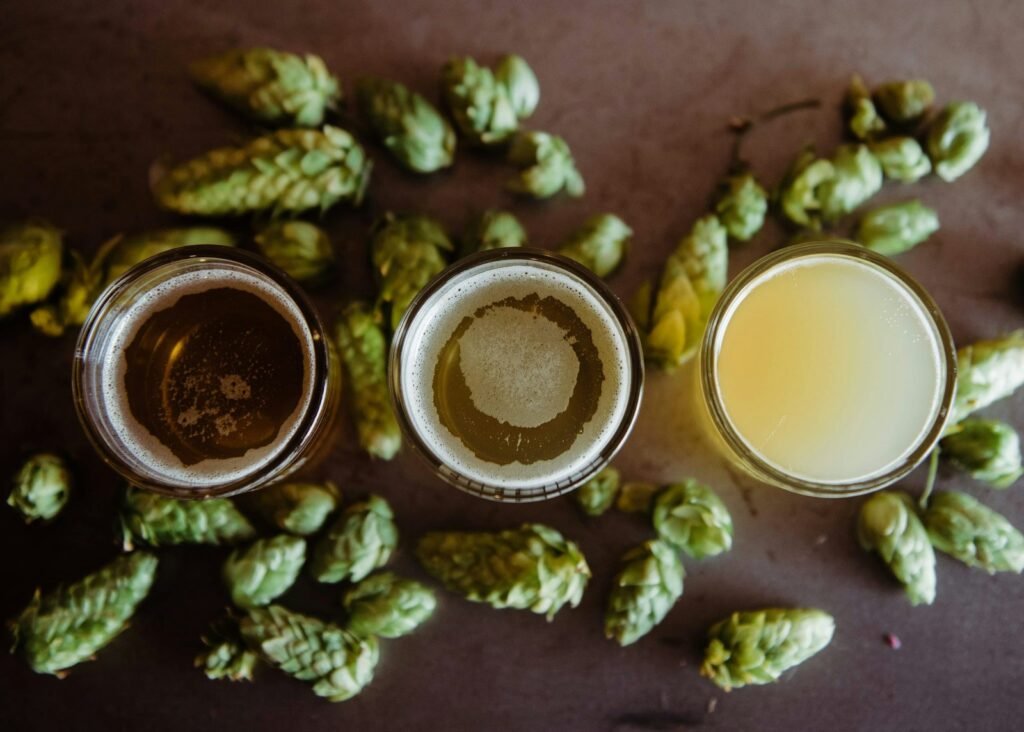
American pale ale generally leaves room for supporting malt alongside the hops. American IPA usually pushes the hop presence and bitter balance further. Hazy IPA also delivers plenty of hop character, but often with a softer texture and less sharply perceived bitterness.
English IPA offers another balance, often combining floral, spicy, or orange-like hop character with bready or biscuity malt. It can still be firmly bitter.
Try saying, “I like citrusy hop aromas, but not a really bitter finish,” or, “I want something piney with a definite bite.” That’s much more useful than asking for the hoppiest beer available.
IBU figures can help, but they don’t tell you exactly how bitter the finished beer will feel.
lighter beer types
Before choosing a lighter beer, decide what you want less of. “Light” can mean four different things.
For lighter color, a pale helles fits the description. Weihenstephaner Original Helles is nevertheless 5.1% ABV, so its appearance doesn’t tell you it’s especially low in alcohol.
For lighter body, American Light Lager is a useful direction. Body means how full or substantial the beer feels in your mouth.
For lower alcohol, compare actual figures. Guinness Draught’s US listing is 4.2% ABV, below Sierra Nevada Pale Ale’s 5.6%, despite the stout being much darker.
For fewer calories, use published nutrition information and equal serving sizes. Bud Light lists 110 calories per 12 fluid ounces; Guinness Draught lists 125. Those figures apply to those products, not their entire styles.
Being specific saves a lot of guesswork, especially when “lighter” means something measurable.
all types of beer
There isn’t one permanent list covering all types of beer in a way everyone agrees on. A useful overview starts with fermentation groupings, then looks more closely at styles.
Ales include the pale ales, IPAs, wheat ales, porters, and stouts discussed here. Lagers include helles, pils, märzen, dunkel, and many others. Neither grouping has a monopoly on pale colors, dark colors, or higher strengths.
Mixed-fermentation beers broaden the picture. Brewers may use combinations of brewing yeast, other yeasts, and bacteria. “Wild” doesn’t automatically mean the microbes arrived by chance; many brewers deliberately introduce selected cultures.
Hybrid approaches also resist tidy temperature rules. Kölsch combines ale fermentation with cold conditioning. California Common uses lager yeast at comparatively warm fermentation temperatures. Fruit, smoke, wood aging, and other specialty treatments can add another layer to a beer’s description.
This guide uses the BJCP 2021 beer framework alongside the Brewers Association’s 2026 framework. They aren’t identical: BJCP uses “Hazy IPA,” while the Brewers Association uses “Juicy or Hazy India Pale Ale.” Their categories shouldn’t be combined into one supposedly definitive count.
For more detail, browse the BJCP 2021 guidelines or the Brewers Association 2026 Beer Style Guidelines, published by the Brewers Association. Use them to understand a beer, not as homework before ordering one.
india pale ale brands
IPA stands for India pale ale. But finding a brewery that makes IPA is only half the job: you still need to choose which IPA.
These products show why the smaller words on the package matter.
| Brewery | Exact product | Declared IPA variant | ABV | Availability note |
|---|---|---|---|---|
| Bell’s | Two Hearted IPA | American IPA | 7.0% | Year-round listing; check locally. |
| Sierra Nevada | Torpedo Extra IPA | West Coast IPA | 7.2% | Year-round; use brewery finder. |
| Sierra Nevada | Hazy Little Thing | Hazy IPA | 6.7% | Current product; use brewery finder. |
| Founders | All Day IPA | Session IPA | 4.7% | Year-round listing; check locally. |
Torpedo and Hazy Little Thing come from the same brewery, but they aren’t interchangeable flavor choices. All Day IPA offers a lower listed strength than the others.
Finding IPA brands you trust is useful. Reading the variant and ABV still matters every time you try a different product.
Can you recommend some popular beers that are classified as IPAs?
Yes. These three offer different reasons to pick them, rather than three versions of the same recommendation.
Bell’s Two Hearted IPA is worth considering for grapefruit-and-pine hop character. It appeared in Craft Beer & Brewing’s 2025 readers’ top-beer list. Its 7.0% ABV and hop-forward character make it less suitable when you’re looking for lower strength or restrained flavor.
Sierra Nevada Hazy Little Thing makes more sense for fruity aroma and a softer finish. Sierra Nevada identified it as its own best-selling beer in March 2026. Just remember that softer doesn’t mean weaker: it’s 6.7% ABV.
Founders All Day IPA is the lower-strength option here at 4.7% ABV. The brewery describes citrusy character, moderate bitterness, and a crisp finish, and identifies it as its largest brand in its 2026 anniversary account. It may suit someone who finds fuller hazy IPAs too substantial, but it still has noticeable bitterness.
Those popularity references measure different things. None makes a beer the automatic winner for your taste.
ipa beer usa
American IPA is a style name, not simply a label for every IPA made in the United States. It describes a hop-forward ale with pronounced bitterness and supporting malt. A US brewery can also make hazy, session, English-style, and other IPA interpretations.
For shopping purposes, flavor and strength are more useful starting points than geography. Do you want a sharper bitter finish, a softer fruity aroma, or a lower-ABV option? The products in the table answer different versions of that question.
Then check what’s actually nearby. Bell’s and Sierra Nevada both provide beer finders through their websites.
Treat those tools as leads, then confirm with the retailer. A brewery’s current product listing doesn’t promise that your local shop has it in stock, and “year-round” isn’t the same as “on every shelf.”
england ipa beer
English IPA, IPA brewed in England, and New England IPA are three different descriptions. One names a style, one tells you where a beer was made, and one refers to the American hazy IPA tradition. The similar wording causes understandable confusion.
English IPA typically combines floral, spicy, or orange-like hops with noticeable bread or biscuit-like malt. It can finish quite dry and bitter, so don’t read “English” as “barely hopped.” Compared with American IPA, the malt often has more presence alongside the hops.
Berkshire Brewing’s Lost Sailor IPA is a useful English-style example. BJCP lists it under English IPA, and the brewery currently includes it in its year-round range. Berkshire Brewing is in Massachusetts, demonstrating that an English-style beer doesn’t have to be made in England.
The reverse is true, too. England’s Thornbridge labels its Jaipur can West Coast IPA, at 5.9% ABV. The brewery’s location doesn’t automatically make that product English-style IPA. Thornbridge Brewery
New England IPA belongs to the hazy tradition: prominent fruit-like hop aroma, softer texture, and generally less sharply perceived bitterness than typical American IPA. It isn’t another name for English IPA.
Check the intended style and the producer’s location separately. That small distinction can make a surprisingly big difference to what ends up in your glass.
Pick the flavor, then pick the beer
Start with one thing you already enjoy: toasted bread, citrus peel, coffee-like roast, gentle bitterness, or a soft texture. Find a style that points in that direction, then check the particular beer and its ABV.
After trying it, keep your verdict specific. “I liked the aroma but wanted less bitterness” gives you somewhere useful to go next. “I don’t like ales” closes far too many doors.
And when you find something you enjoy, save the full name. Remembering “the one with the blue label” only gets you so far.
Frequently Asked Questions
What is a hazy IPA?
Hazy IPA is a hop-forward ale with a softer approach, emphasizing fruit-like aromas and a fuller impression rather than the sharper finish associated with many American IPAs. Sierra Nevada describes its Hazy Little Thing as fruit-forward, with modest bitterness.
What is lager beer?
Lagers are beers that use lager yeast in customary modern brewing terminology. Helles, German Pils, märzen and dunkel are all lager styles, and the grouping concerns fermentation, not whether the beer is pale.
What is stout beer?
Irish Stout is an ale style that gives roasted flavor more room, often with a distinctly dry finish. Guinness Draught is the obvious reference, and its producer describes roasted coffee and chocolate aromas.
What is hefeweizen beer?
Hefeweizen is a common name for weissbier, a wheat-based ale. Banana-like fruitiness, clove-like spice and a fluffy feel are characteristic, and they come from fermentation, not from banana or clove additions.
What are ales?
Pale ales, American and English IPAs, weissbier, English porter and Irish stout all sit within the ale grouping. IPA is a kind of ale in this framework, not an alternative to ale.
What is a West Coast IPA?
West Coast IPA is a label breweries use for some hop-forward IPAs. Sierra Nevada lists Torpedo Extra IPA as a West Coast IPA at 7.2% ABV, and England's Thornbridge labels its Jaipur can West Coast IPA at 5.9%, so the brewery's location does not decide the style.
What is porter beer?
English Porter is a dark ale with room for cocoa, toasted bread, caramel and restrained roasted flavors. Fuller's London Porter is a useful example, and the brewery describes coffee and chocolate notes in its bottled version.
What does beer taste like?
It depends on the style. Munich Helles is soft and bread-like, German Pils is crisp with a firm bitter finish, weissbier brings banana-and-clove character, English Porter leans toward chocolate-like malt, Irish Stout toward dry, coffee-like roast, and American IPA toward prominent hops.